Usage Insights
Working in an open space or from home presents a constant challenge: how to effectively signal to those around you that you need to focus. The concept of the Busy Bar smart status indicator, which visually shows your current availability, is a very elegant solution from a productivity perspective.
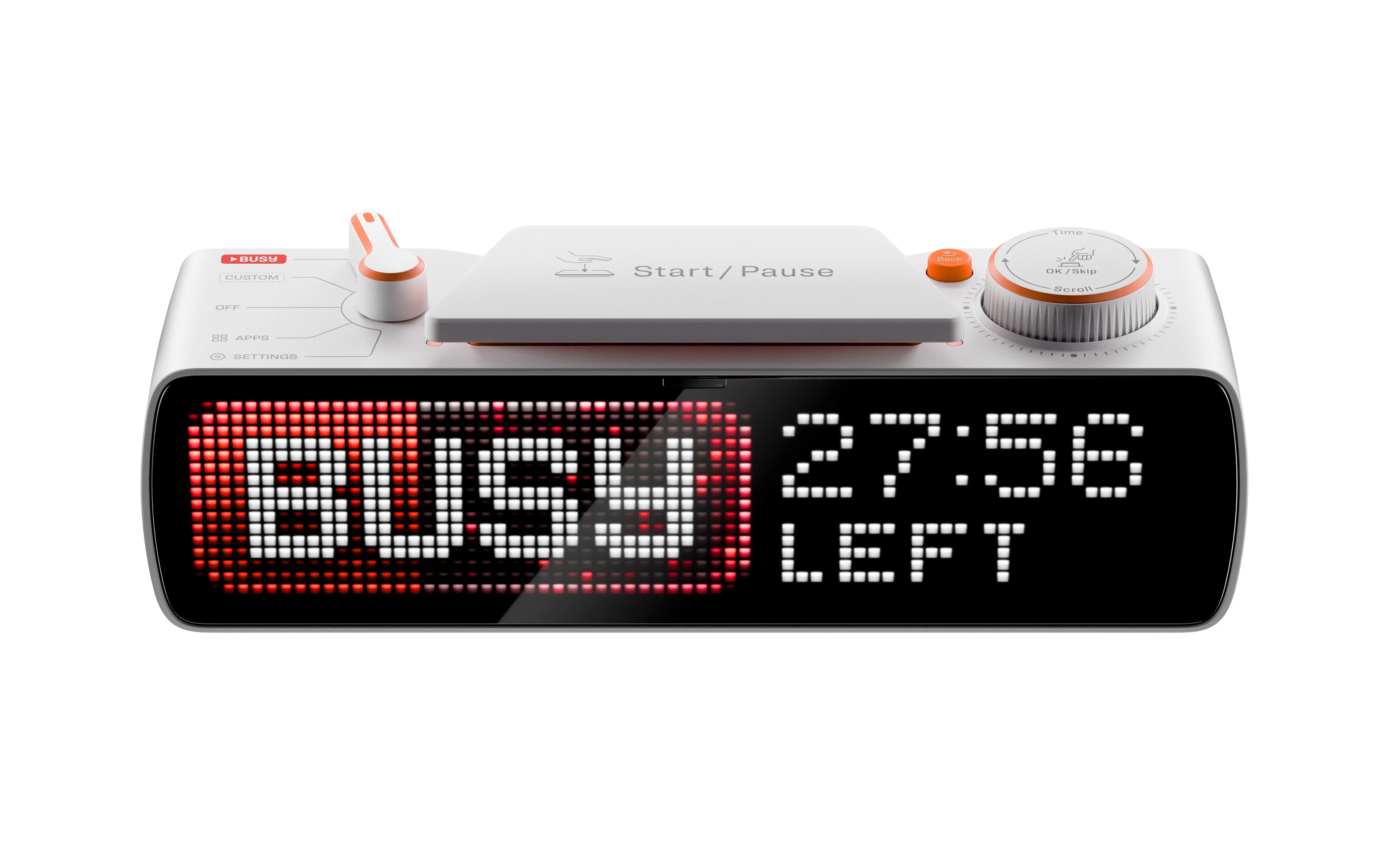
After several days of daily use, it turns out that while the hardware itself fulfills its primary task exceptionally well, the overall user experience currently runs into a few limitations within the software ecosystem and power management.
Hardware and Power Management: The Price of Wireless Operation
In terms of design and functionality, the device is clean and well-crafted. The LED indication is bright, the colors are easily readable even from a distance, and people nearby quickly get used to the visual cues. However, the main practical challenge lies in energy management.
- Passive drain when powered off: The most significant limitation is battery life. Even when you turn off the device at the end of the workday, gradual self-discharge still occurs. If you plan to use the Busy Bar primarily wirelessly, you need to expect more frequent recharges than the actual active lit-up time would suggest.
- Practical solution: In practice, keeping it continuously powered via a USB cable on your desk proves to be the most reliable approach, though this slightly reduces the intended portability of the device.
Software and Controls: Mobile vs. Desktop
For a device of this kind, the speed and convenience of changing your status are crucial. An ideal workflow naturally relies on direct integration into the desktop operating system you are working on.
1. macOS Application
The official desktop application currently covers basic communication with the device, but more advanced features are clearly still a work in progress. When attempting to control specific modes directly within the macOS interface, you encounter a Coming Soon label. In terms of work efficiency, this is a pity, as a global keyboard shortcut or a quick action in the menu bar would elevate the overall user experience significantly.
2. Smartphone Control
The mobile app is further along feature-wise, and toggling individual modes works reliably. From a workflow ergonomics standpoint, however, it is not an entirely optimal routine:
- Having to pick up your phone, unlock the screen, and open the app just to change your status creates an unnecessary extra step.
- If the indicator is meant to support deep focus, manual control via mobile is more of a temporary workaround until full desktop control and automation become available.
Final Verdict
The Busy Bar is a useful desk accessory that successfully addresses a real problem with interruptions during focused work. Both the visual design and legibility are at a very high standard.
However, to become a truly seamless part of a daily workflow, it will primarily need full mode functionality unlocked in the macOS app and future optimization of power consumption in standby mode. For a permanent setup on a desk connected via cable, it performs its role quite well even today.